Japan travel · 5 min
Best Time to Visit Japan: How to Choose
How to choose the best time to visit Japan by region, including Kyoto, Kyushu, and Okinawa, using official seasonal pages instead of a single blossom week.
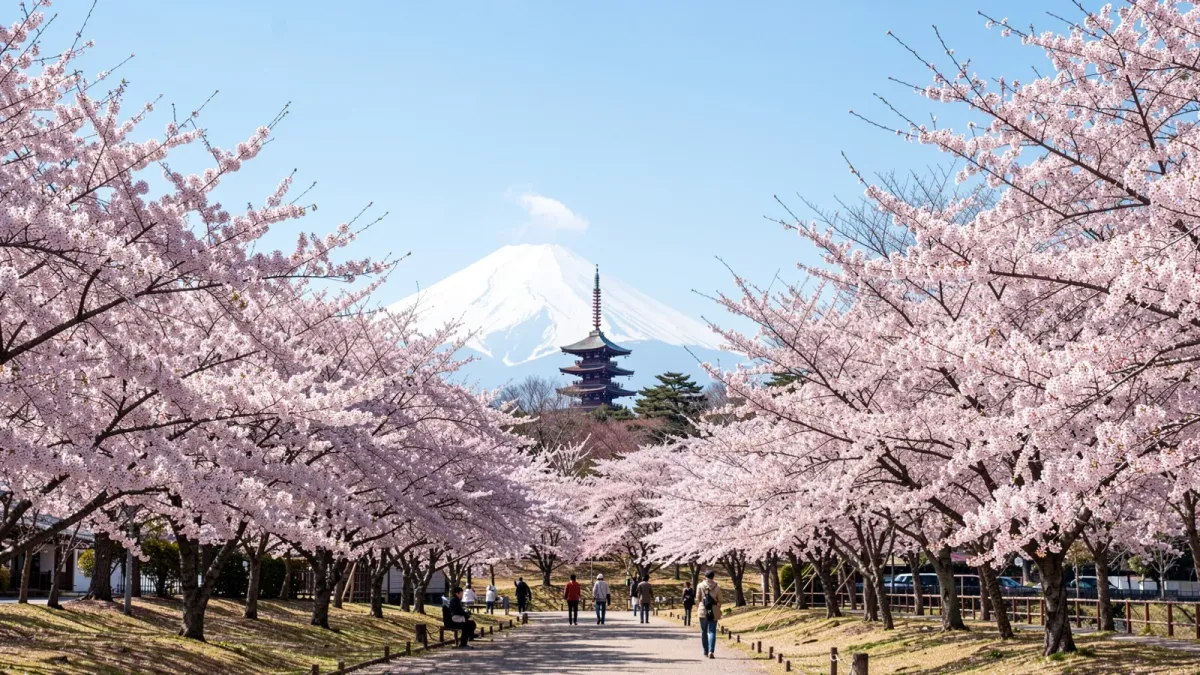
The best time to visit Japan depends on the region, not on a single postcard
"Best time to visit Japan" is often answered with a single week in spring, as if the country were one garden. It is not. Kyoto, Kyushu, Okinawa, and Hokkaido do not keep the same calendar. Cherry blossoms move from year to year and from south to north. A rainy week can sit inside a beautiful month. A busy holiday can make a "perfect" season feel like a queue. The honest way to choose is to name the region, the kind of weather you can enjoy, and the official season pages, then accept that nature will not honor a booked photograph.
This is a how-to-choose guide, not a guarantee of bloom dates, and not a set of invented crowd statistics. For a national overview, use the official Japan National Tourism Organization site, japan.travel, including its current seasonal pages. For entry and safety, use travel.state.gov or FCDO foreign travel advice, depending on your country. For weather, use official meteorological information, not a screenshot of someone else's trip. Bloom forecasts, when you need them, belong on official or major public Japanese sources that are updated in the year you travel.
A regional season table, without fake exact dates
| Region or question | What to remember | Official habit |
|---|---|---|
| What is the best time to visit Japan overall? | There is no single official week. Choose by region and by whether you want mild weather, snow, beach climate, or autumn color | Read JNTO seasonal pages and official regional pages for the places on your list |
| Kyoto and much of Honshu in spring | Famous for blossoms, also famous for busy travel; dates move each year | Check current official bloom and travel-season information, and book transport on official operator pages |
| Autumn color | Also moves by year and by altitude; can be excellent and can be busy | Same habit: official seasonal pages, not last year's week |
| Summer, including much of Honshu and Kyushu | Heat and humidity can be serious; festivals and school holidays change the feel | Official heat and weather information; plan indoor hours and hydration |
| Rainy season and typhoons | These are real seasonal patterns in much of the country, and they vary by year and by region | Official meteorological and travel-advice pages as your dates approach |
| Hokkaido, including around Sapporo | A different climate; winter and summer are not Honshu's winter and summer | Official Hokkaido or Sapporo tourism and weather pages |
| Okinawa | A different climate again; "Okinawa Japan best time to visit" is its own question, including official storm-season attention | Official Okinawa and meteorological pages, not a Kyoto packing list |
| Kyushu | Southern, and not a copy of Kyoto's calendar; "best time to visit Kyushu Japan" should be looked up on official Kyushu pages | Official regional pages plus the same national advice links |
The myth is that if you miss the "peak" week, the trip failed. A week on either side can be kinder, cheaper in the sense of calmer, and still beautiful. Another myth is that official blossom maps are a promise. They are a forecast.
A checklist for choosing your dates
- You have named the region or regions, not only "Japan"
- You have read current official seasonal information for those regions
- You accept that bloom and color dates move, and you have a trip that is still good if they do
- School holidays, Golden Week, and other busy official holiday periods are on your radar if you hope to avoid or to join them
- Official travel advice is current
- Heat, rain, snow, or storm-season information has been looked at honestly for your dates
- Transport reservations will be checked on official pages, especially in busy seasons
- Your packing list matches that region's season, not a generic spring photograph
- If you hope to add Okinawa or Hokkaido, you have looked at that climate as a separate question
If your dates are fixed by work or school, choose the region that fits those dates, rather than forcing a blossom itinerary into the wrong week.
How to think about "shoulder" weeks and fixed school holidays
If you can travel just before or after a famous peak, you may still see plenty, with a little more air in the streets. If you can only travel in a school holiday, you can still have a good trip: book official reservations earlier, do less each day, and start earlier in the morning. The "best time" is sometimes the time you actually have, in a region that is tolerable then, with a plan that is kind.
Do not use a friend's photographs from a different year as a forecast. Do not use a single average temperature chart as a packing list. Mornings and nights can be cold when middays are mild. Official forecasts closer to the week will always beat a guidebook's monthly cartoon.
Packing and booking once the month is chosen
Once you have a region and a month, pack for that region, not for a national average. Hokkaido in January and Okinawa in January are different bags. Official forecasts nearer the date will still earn a last look. Book the pieces official pages say are tight in that season: certain trains, popular lodging, or timed tickets, all on official or named official-partner channels.
If your chosen season is hot, plan indoor hours and water. If it is snowy, plan official transport updates and shoes with a grip. If it is a famous blossom or maple week, plan earlier starts and alternative days that are still satisfying if a slope is crowded. The "best time" becomes a good time when the bookings and the bag match the weather you actually chose.
Questions about the best time to visit Japan
What is the best time to visit Japan for cherry blossoms?
There is no fixed date and no single national week. Blossoms typically move through the country over a season, and they move year to year. Check current official or major public forecasts in the year you travel, and build a trip that is still worthwhile if the peak is early or late.
When is the best time to visit Okinawa, Japan?
Look at official Okinawa and meteorological pages, including the time of year when heat, rain, or storms are more likely, and match that to whether you want a beach trip. Do not copy a Kyoto spring answer.
When is the best time to visit Kyushu, Japan?
Use official Kyushu seasonal information. It is generally a different, often earlier or milder, calendar than northern Honshu, and it is still not a promise. Check the year you travel.
Is there a bad time to visit Japan?
There is a time that may be a poor match for your heat tolerance, your interest in snow, or your patience with holiday crowds. Official pages will describe conditions. They will not call a season "bad." They will give you enough to choose.